Choosing the Right Water Filtration System for Your Home

Water is one of those things we tend to take for granted. Turn on the tap, fill a glass, and move on with the day. But when the water starts tasting strange, leaves white marks on the sink, or makes you wonder what’s actually coming through the pipes, suddenly it becomes a much bigger concern.
The good news is that improving your home’s water quality doesn’t necessarily mean buying the most expensive system on the market. The right solution depends on what’s in your water, how much water your household uses, and what you’re hoping to improve. Sometimes a simple filter is enough. Other homes may benefit from a softener or a more advanced purification setup.
Before spending money, it helps to understand the differences.
Start by Understanding Your Water
Not all water problems are the same. Hard water, for example, is usually caused by minerals such as calcium and magnesium. It isn’t necessarily dangerous to drink, but it can create plenty of everyday headaches. You may notice soap that doesn’t lather properly, dull-looking laundry, dry-feeling skin, or a chalky buildup around faucets and showerheads.
Then there are issues involving taste, odor, sediment, chlorine, or other contaminants. These require different approaches.
That’s why getting your water tested can be a surprisingly useful first step. Instead of guessing which equipment you need, you’ll have a better idea of what you’re actually trying to fix.
What Do Reverse Osmosis Systems Actually Do?
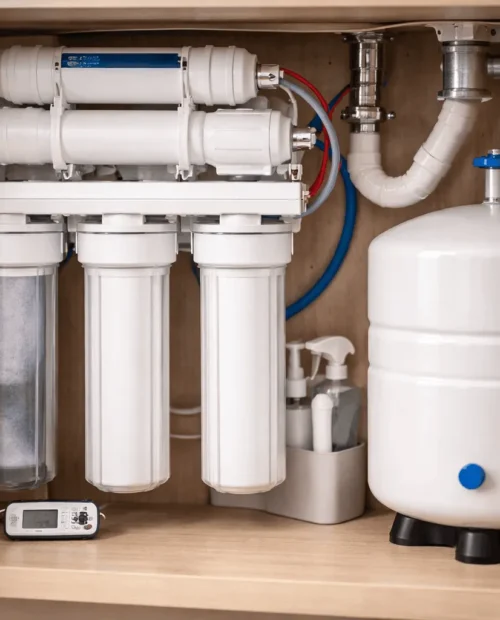
For households concerned about dissolved contaminants, reverse osmosis systems are often considered one of the more thorough options for drinking water. The process pushes water through a very fine membrane that can reduce a range of dissolved substances and impurities.
It sounds complicated, but the basic idea is fairly straightforward: water passes through the membrane while many unwanted substances are left behind.
These systems are commonly installed under the kitchen sink and are particularly useful when the main goal is cleaner-tasting water for drinking and cooking. They can also be paired with other filtration stages, depending on the quality of the incoming water.
There is a trade-off, though. Reverse osmosis can produce wastewater, and the filters and membrane need periodic replacement. So it’s not really a “install it and forget it” appliance. A little maintenance keeps the system performing properly.
When Hard Water Is the Real Problem
If your biggest complaint is mineral buildup rather than questionable drinking water, a water softener may make more sense.
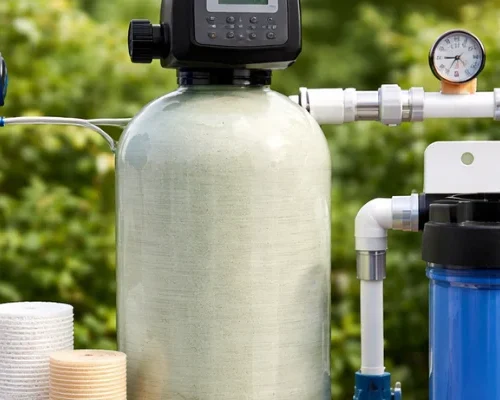
A softener works differently from a drinking-water filter. Its primary job is to reduce the minerals responsible for hardness. This can help protect plumbing fixtures and water-using appliances while making everyday tasks like washing dishes and doing laundry a little easier.
This is where a careful water softener comparison becomes useful. Look beyond the purchase price. Consider the size of your household, water consumption, regeneration method, salt or maintenance requirements, warranty, and available installation space.
A cheap system that isn’t appropriately sized can become frustrating pretty quickly. On the other hand, buying a huge unit for a small household may simply mean spending more than necessary.
Filtration and Purification Aren’t the Same Thing
The words “filter” and “purifier” are sometimes used interchangeably, but they don’t always mean the same thing.
A basic sediment filter can remove visible particles such as sand or rust. Activated carbon filters can improve taste and odor while reducing certain chemicals. More advanced technologies target dissolved contaminants or microorganisms.
This is why shopping based only on marketing claims can be misleading. A system may be excellent at removing one particular contaminant but have little effect on another.
Think of water treatment as matching the tool to the problem. You wouldn’t use a vacuum cleaner to fix a leaking pipe. Water filtration works much the same way.
Think About How Your Household Uses Water
Another question worth asking is whether you need to treat all the water entering your home or only the water you drink.
Whole-house systems treat water at the point where it enters the property. They can make sense when the concern involves bathing, laundry, plumbing, or general household water quality.
Point-of-use equipment, meanwhile, focuses on specific taps. Under-sink filtration is a popular example because it concentrates treatment where drinking and cooking water are needed.
Modern drinking water systems come in many forms, from straightforward carbon filters to multi-stage purification units. The best choice isn’t necessarily the system with the longest list of features. It’s the one that addresses your actual water concerns without creating unnecessary maintenance or expense.
Don’t Ignore Maintenance
This part isn’t glamorous, but it’s important.
Every filtration system has components that eventually need attention. Filters become saturated. Membranes lose efficiency. Softener systems may require salt or other servicing. Neglecting those tasks can reduce performance and, in some cases, create hygiene concerns.
Before buying anything, find out how often replacement parts are needed and how much they cost. Ask whether you can replace them yourself or whether professional servicing is recommended.
A system that costs slightly more upfront but uses affordable, readily available replacement filters might be easier to live with over several years.
Installation Matters More Than People Think
Installation can also affect how well a water treatment system performs. Incorrect connections, unsuitable plumbing, inadequate drainage, or poor positioning can create problems that have nothing to do with the technology itself.
For more complicated installations, especially whole-house equipment, professional installation is usually worth considering. A qualified installer can also help determine whether your existing plumbing and water pressure are suitable.
And don’t forget the space requirements. That sleek unit you saw online might look tiny in a product photo and considerably less tiny once you’re standing in front of it with a measuring tape.
A Practical Way to Make the Decision
If you’re overwhelmed by choices, narrow the process down to a few questions:
What is actually wrong with the water?
Is the problem mainly taste and odor, hardness, sediment, or dissolved contaminants?
Do you want to treat drinking water or the entire home’s supply?
How much maintenance are you comfortable handling?
And finally, what will the system cost over its useful life rather than just on the day you buy it?
Those questions can eliminate a surprising number of unsuitable options.
Better Water Starts With the Right Solution
There isn’t one water treatment system that’s perfect for every home. A family dealing with severe hard water may need something very different from someone who’s simply tired of chlorine taste in their morning glass of water.
The smartest approach is to identify the problem first and choose the technology second. Test the water when appropriate, compare long-term costs, understand maintenance requirements, and don’t be swayed by features you don’t actually need.
Good water treatment should make life easier, not turn into another household chore. When the system fits your water quality, lifestyle, and budget, you’ll probably notice the difference in all those small everyday moments — from a better-tasting glass of water to a cleaner-looking faucet. And honestly, that’s what makes the investment worthwhile.